
Blaise AI Beta: Entity-Linked AI for Medicinal Chemistry
Why ‘entity-linked’ beats generic chat — and what a chemistry-native copilot actually looks like.
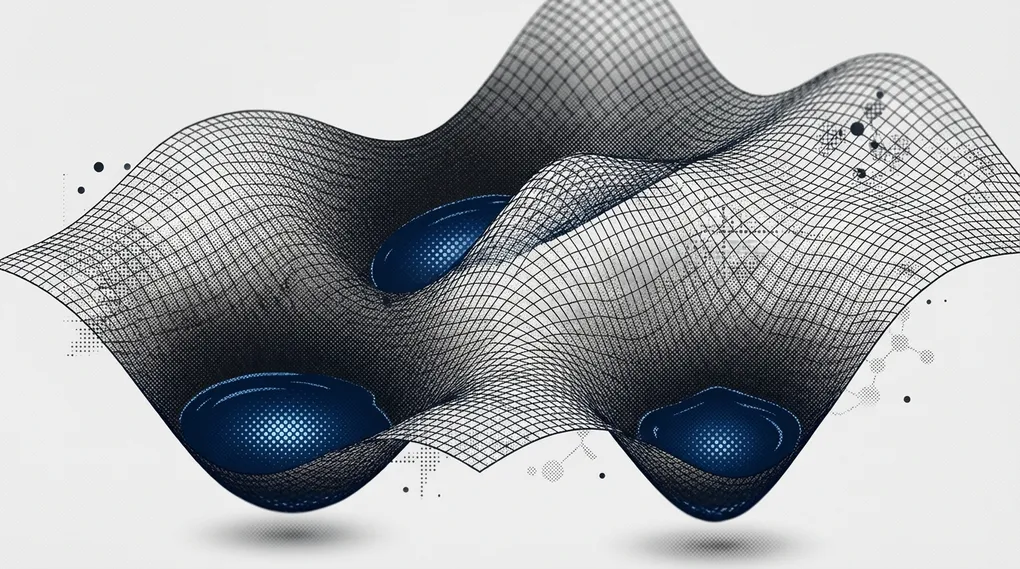
Most “structure-aware” ML methods still reason from a single chosen pose. That move is computationally convenient, but it’s chemically wrong.
A small molecule is not a single 3D object; it’s a distribution over conformations. Binding, permeability, and intramolecular H-bonding depend on the family of shapes the molecule can realistically occupy. When you pick one pose and call it “the structure,” you erase the actual variable you’re trying to reason about.
This matters even if you never run a docking campaign. Conformation drives everything from exposed polar surface area versus shielded PSA to effective flexibility penalties. It dictates the presence of productive IMHB patterns and defines scaffold topology differences across analogues. If your workflow treats 3D as a thumbnail, you will keep getting surprised by “obvious” failures.
With Blaise AI, we treat conformer ensembles as first-class objects. Instead of treating 3D as an afterthought, you can generate ensembles and interrogate the conformation space interactively. This lets you compare ensemble properties across a congeneric series, spot conformational locks or torsional bottlenecks, and reason about shape families rather than single snapshots.
Think of a molecule as living on a manifold. Your job isn’t to find the pose. It’s to understand which regions of the manifold are populated, which are accessible under realistic conditions, and how substitutions move probability mass around.
That’s the kind of reasoning medicinal chemists already do informally. Blaise makes it explicit.