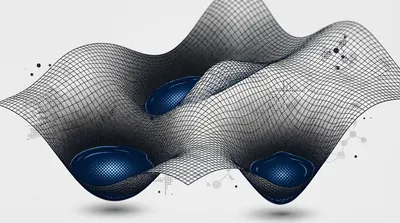
When Generation Becomes Cheap, Expertise Moves to Selection
When generation becomes abundant, the real skill becomes navigating the space of possibilities.
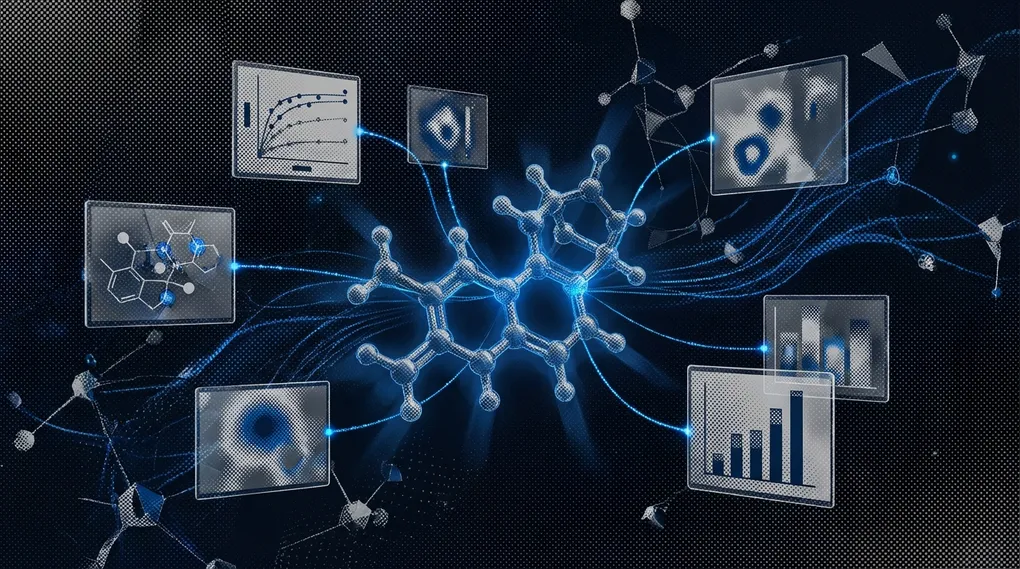
Blaise AI is live in beta.
It isn’t just chat with a molecule pasted in. It’s a workspace where the AI’s reasoning attaches to the objects chemists actually argue about: structures, series, assay tables, and the edits that connect one design decision to the next.
A medicinal chemistry program is a graph, not a document. It’s a tangle of molecules, messy multi-source assays, series hypotheses (like why a substitution fixed lipophilicity but killed permeability), and the specific decisions to make, drop, or modify a compound.
Generic chat models treat all that context as a blob of tokens. The output might sound plausible, but it floats; it isn’t anchored to project reality.
Blaise is built around a different constraint: every claim the AI makes must point to the molecule and the data it is using. That’s what “entity-linked” means.
In Blaise, a message isn’t just text. It’s a set of hard references: a specific compound or congeneric series, an assay readout with provenance, or an MMP-style transformation.
The difference hits you when you try to do real work. You can click from a sentence directly to the structure it refers to. You can audit exactly why the model said what it said. And you can reuse those conclusions later because they aren’t just free-floating prose.
The beta focuses heavily on series navigation and SAR interrogation. We built it to handle matched-pair analysis that surfaces transformations that actually moved the needle in your data, and assay-table navigation that skips the usual copy-paste spreadsheet archaeology.
Crucially, the copilot stays inside the series context instead of hallucinating global medicinal chemistry folklore.
This requires a UI where molecules are first-class objects. Structures are selectable entities, series are navigable units, and properties are attached to provenance. It is chemistry-native interaction, not a chat box with RDKit sprinkled on top.
If you live inside series decisions, spend time reconciling assay values across sources, and want AI that is auditable rather than just conversational, the beta is already useful.
It is open now with a free trial for early sign-ups. The goal isn’t pretty text. It’s faster, more correct decisions about molecules—backed by a traceable chain of evidence.